Free Facebook Likes XMinds Education: Learning Strategies
Showing posts with label Learning Strategies. Show all posts

Learning Strategies For Students

Here are some learning and memory techniques that will help with the process.

Learning Strategies

  • Outline
  • Divide
  • Vary
  • Incubate
  • Revise
  • Engage

Outline


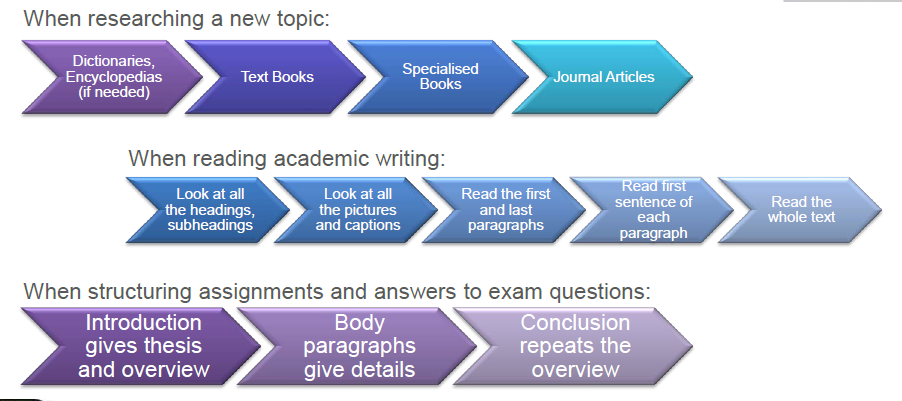
An outline of a topic gives people a framework on which they can add details to get a picture of what they are learning.


Textbooks, articles 
and essays usually 
start with an 
introductory overview


Scenes in movies and
TV often show a long
shot before they zoom into the close ups.
If you ask someone to draw
a house, they will usually
draw the walls and roof
before they fill in details like
doors and windows
When reading, writing, explaining and in exams, order your information from the general to the detailed


5 Highly Successful Teaching Practices

We teachers are always looking to innovate, so, yes, it's essential that we try new things to add to our
pedagogical bag of tricks. But it's important to focus on purpose and intentionality -- and not on quantity. So what really matters more than "always trying something new" is the reason behind why we do what we do.

I have spent more than 15 years researching the influences on achievement of K-12 children. My findings linked student outcomes to several highly successful classroom practices. Here I'd like to highlight five of those practices:

1. Teacher Clarity
When a teacher begins a new unit of study or project with students, she clarifies the purpose and learning goals, and provides explicit criteria on how students can be successful. It's ideal to also present models or examples to students so they can see what the end product looks like.

2. Classroom Discussion
Teachers need to frequently step offstage and facilitate entire class discussion. This allows students to learn from each other. It's also a great opportunity for teachers to formatively assess (through observation) how well students are grasping new content and concepts.

3. Feedback
How do learners know they are moving forward without steady, consistent feedback? They often won't. Along with individual feedback (written or verbal), teachers need to provide whole-group feedback on patterns they see in the collective class' growth and areas of need. Students also need to be given opportunities to provide feedback to the teacher so that she can adjust the learning process, materials, and instruction accordingly.

4. Formative Assessments
In order to provide students with successful and accurate feedback, teachers need to assess frequently and routinely where students are in relation to the unit of study's learning goals or end product (summative assessment). Hattie recommends that teachers spend the same amount of time on formative evaluation as they do on summative assessment.

5. Metacognitive Strategies
Students are given opportunities to plan and organize, monitor their own work, direct their own learning, and to self-reflect along the way. When we provide students with time and space to be aware of their own knowledge and their own thinking, student ownership increases. And research shows that metacognition can be taught.

Collaborating with Colleagues
Great teachers are earnest learners. Spend some time with a colleague, or two or three, and talk about what each of these research-based, best classroom practices looks like in the classroom. Discuss each one in the context of your unique learning environment: who your students are, what they need, what they already know, etc.
How do you already bring these five classroom practices alive in your classroom? Please share in the comments section below.

10 Apex New Teaching Techniques for 2015-16

Want more satisfied learners?  Vary your teaching techniques.

Get creative with new teaching techniques. Liven up your classes, and it could enhance your repeat rates.  Encourage your teachers to think outside the box, try something new and don’t worry about failing.
Try one thing new each time.
The top new ‘wow’ teaching technique for 2015-16:  have your students write on the windows in your classroom.
Here are the Top 10 best new teaching techniques for 2015-16.
2. Students find the mistakes
Most teachers found this fun and useful exercise for their resume building course, but other teachers say the idea is so good it can be applied to many other kinds of courses as well.
“I have given a brief lesson on building a resume that was a lot of fun. I explained the key components of what should go into a good resume then shared one that I had made up. It was all wrong. I asked the students to tell me what was wrong. I had a crazy photo up in the corner. The email address was hotpants@hotmail.com (I’ve actually seen that used). Under references I put: Aunty Sue. I printed the resume on colored paper, etc. Once students started to identify what was wrong I would explain the reasons you don’t put your photo on a resume, use an unprofessional email address, make spelling errors, etc. It was a fun lesson and I think they realized the importance of their resume.
Another teacher added: I love the idea of having the students correct a document with some amusing (and I imagine obviously incorrect) content.
3. Silly answer quizzes
The more frequent you give your students quizzes, the more they learn. And they like it, especially when trainer Karla Peiffer adds silly answers.
“I also make it a point to provide a quiz at the end of every training session to reinforce new information that is presented or to emphasize a criteria that is perhaps not being followed. I like to add in silly answers to the quiz (1 multiple choice answer that is obviously not correct) to make it a little more fun and not have them take the quiz so seriously. We go over the quiz together to reinforce the correct answers. This provides a summary of the key points of the training session as well.”
Frank Sattler has a little variation on the silly answer technique:
“Karla, your quiz sounds like something I would do. One answer that would just make the participants giggle. Sometimes I would put a joke or two between questions just to keep them motivated. As I would go over the quiz at the end of class many would comment about the jokes and how they wish they had that when they were in school.”
4. Fix the sick slides

Sherryl Maglione has another variation on students finding errors, this one with some props.
“Grammar is necessary — we all know this and yet, with the advent of texting language, grammar may not be a critical part of people’s lives. We have all seen the ‘Let’s eat Grandpa’ and ‘Let’s eat, Grandpa’ poster. What I do to jazz up my grammar lessons is this: I went to the university bookstore and bought a white lab coat. On the lab coat, using fabric markers, I printed: Dr. Magz’ Writing Clinic. I went to Wal-Mart and purchased a toy doctor’s kit and some small candies. Then I prepared incorrect grammar slides on PowerPoint and was the ‘doctor’ for the first few slides. Students each took a turn being the doctor and ‘treating’ the ‘sick grammar’ on the slides and when a student in the class knew the correct answer or fix to the grammar ‘symptom’, the student received a candy from Dr. Grammar. It is a very fun way to have students participates and I can remember one class especially because when the class was over, the students were saying, ‘Are you kidding me? I cannot believe that this class went so fast!’ That was awesome for them!”
5. Select a travel partner
Wanda Jones has fun, and so do her students, with this one.
“One of the activities I like to do is have them to select a ‘travel’ partner. To do this activity, I give each of them a sheet of paper that has pictures 4 different modes of transportation on it, such as a boat, airplane, car, or bicycle. At the beginning of the session I give them time to go around the room to meet someone they do not know and to sign up a person for method of transportation. Once they have completed this task, they hold onto the sheet until time for discussions in which they get up and locate the person they identified for a specific mode of transportation. For example, I may ask them to locate their “boat” partner to discuss the topic we are addressing at the time. When we come back together as a group, they can share their ideas together with the whole group or individually. It is up to them how they share and what they share.”
6. Pair-work: Take charge 
Pamela Horowitz suggests:
I do like to have my students do pair-work. This enables them to help each other and take charge of their learning.
7. Teacher for the day
Having your students help teach each other is one of the all-time best teaching techniques.  Most recently, teacher Pamela Horowitz noted,  “At times, I have had each student be ‘teacher for the day,’ but they are usually reluctant to do this, stating that they are not teachers. I politely disagree with them, and they give it a try.”
8. Repeat tasks 3-4 times
Jeanise Demitri adds,
“I have the students do a task three or four times to get them use to the sequence. Having them repeat a task has always worked very well for the students. “
9. Theme for the month
Chrystie Backus does this:
“I create a theme for the month, such as Holiday Recipes or Gardening, and then poll the class to see what types of things they would like more information about, any activities they would like to learn, or anything specific they would like to try. I then incorporate these ideas into the course material.”
10. Funny socks

Chrystie Bockus reports, “I wear funny socks, especially when teaching. Great conversation starter.”

9 Strategies to Cater Daily Life with Critical Thinking

Most of us are not what we could be. We are not as much of We should have. We have great
competence. But most of it is inactive; most is undeveloped. Improvement in thinking is like improvement in basketball, in ballet, or in playing the saxophone. It is unlikely to take place in the absence of a conscious commitment to learn. As long as we take our thinking for granted, we don’t do the work required for improvement.
Development in thinking requires a gradual process requiring plateaus of learning and just plain hard work. It is not possible to become an excellent thinker simply because one wills it. Changing one’s habits of thought is a long-range project, happening over years, not weeks or months. The essential traits of a critical thinker require an extended period of development.
How, then, can we develop as critical thinkers? How can we help ourselves and our students to practice better thinking in everyday life?

In this article, we will explain 9 strategies that any motivated person can use to develop as a thinker. As we explain the strategy, we will describe it as if we were talking directly to such a person. Further details to our descriptions may need to be added for those who know little about critical thinking. Here are the 9:

1. Use “Wasted” Time.
2. A Problem A Day.
3. Internalize Intellectual Standards.
4. Keep An Intellectual Journal.
5. Reshape Your Character.
6. Deal with Your Ego.
7. Redefine the Way You See Things.
8. Get in touch with your emotions.
9. Analyze group influences on your life.

There is nothing magical about our ideas. No one of them is essential. Nevertheless, each represents a plausible way to begin to do something concrete to improve thinking in a regular way. Though you probably can’t do all of these at the same time, we recommend an approach in which you experiment with all of these over an extended period of time.

First Strategy: Use “Wasted” Time.
All humans waste some time; that is, fail to use all of their time productively or even pleasurably. Sometimes we jump from one diversion to another, without enjoying any of them. Sometimes we become irritated about matters beyond our control. Sometimes we fail to plan well causing us negative consequences we could easily have avoided (for example, we spend time unnecessarily trapped in traffic — though we could have left a half hour earlier and avoided the rush). Sometimes we worry unproductively. Sometimes we spend time regretting what is past. Sometimes we just stare off blankly into space.
The key is that the time is “gone” even though, if we had thought about it and considered our options, we would never have deliberately spent our time in the way we did. So why not take advantage of the time you normally waste by practicing your critical thinking during that otherwise wasted time? For example, instead of sitting in front of the TV at the end of the day flicking from channel to channel in a vain search for a program worth watching, spend that time, or at least part of it, thinking back over your day and evaluating your strengths and weaknesses. For example, you might ask yourself questions like these:
When did I do my worst thinking today? When did I do my best? What in fact did I think about today? Did I figure anything out? Did I allow any negative thinking to frustrate me unnecessarily? If I had to repeat today what would I do differently? Why? Did I do anything today to further my long-term goals? Did I act in accordance with my own expressed values? If I spent every day this way for 10 years, would I at the end have accomplished something worthy of that time?
It would be important of course to take a little time with each question. It would also be useful to record your observations so that you are forced to spell out details and be explicit in what you recognize and see. As time passes, you will notice patterns in your thinking.

Second Strategy: A Problem A Day.

At the beginning of each day (perhaps driving to work or going to school) choose a problem to work on when you have free moments. Figure out the logic of the problem by identifying its elements. In other words, systematically think through the questions: What exactly is the problem? How can I put it into the form of a question. How does it relate to my goals, purposes, and needs?
                1) Wherever possible take problems one by one. State the problem as clearly and precisely as you can.

2) Study the problem to make clear the “kind” of problem you are dealing with. Figure out, for example, what sorts of things you are going to have to do to solve it. Distinguish Problems over which you have some control from problems over which you have no control. Set aside the problems over which you have no control, concentrating your efforts on those problems you can potentially solve.

3) Figure out the information you need and actively seek that information.

4) Carefully analyze and interpret the information you collect, drawing what reasonable inferences you can.

5) Figure out your options for action. What can you do in the short term? In the long term? Distinguish problems under your control from problems beyond your control. Recognize explicitly your limitations as far as money, time, and power.

6) Evaluate your options, taking into account their advantages and disadvantages in the situation you are in.

7) Adopt a strategic approach to the problem and follow through on that strategy. This may involve direct action or a carefully thought-through wait-and-see strategy.

8) When you act, monitor the implications of your action as they begin to emerge. Be ready at a moment’s notice to revise your strategy if the situation requires it. Be prepared to shift your strategy or your analysis or statement of the problem, or all three, as more information about the problem becomes available to you.

Third Strategy: Internalize Intellectual Standards.

Each week, develop a heightened awareness of one of the universal intellectual standards (clarity, precision, accuracy, relevance, depth, breadth, logicalness, significance). Focus one week on clarity, the next on accuracy, etc. For example, if you are focusing on clarity for the week, try to notice when you are being unclear in communicating with others. Notice when others are unclear in what they are saying.
When you are reading, notice whether you are clear about what you are reading. When you orally express or write out your views (for whatever reason), ask yourself whether you are clear about what you are trying to say. In doing this, of course, focus on four techniques of clarification : 1) Stating what you are sayingexplicitly and precisely (with careful consideration given to your choice of words), 2) Elaborating on your meaning in other words, 3) Giving examples of what you mean from experiences you have had, and 4)Using analogies, metaphors, pictures, or diagrams to illustrate what you mean. In other words, you will frequently STATE, ELABORATE, ILLUSTRATE, AND EXEMPLIFY your points. You will regularly ask others to do the same.

Fourth Strategy: Keep An Intellectual Journal.

Each week, write out a certain number of journal entries. Use the following format (keeping each numbered stage separate):
               
1. Situation. Describe a situation that is, or was, emotionally significant to you (that is, that you deeply care about). Focus on one situation at a time.

2. Your Response. Describe what you did in response to that situation. Be specific and exact.

3. Analysis. Then analyze, in the light of what you have written, what precisely was going on in the situation. Dig beneath the surface.

4. Assessment. Assess the implications of your analysis. What did you learn about yourself? What would you do differently if you could re-live the situation?

Strategy Five: Reshape Your Character.

Choose one intellectual trait---intellectual perseverance, autonomy, empathy, courage, humility, etc.--- to strive for each month, focusing on how you can develop that trait in yourself. For example, concentrating on intellectual humility, begin to notice when you admit you are wrong. Notice when you refuse to admit you are wrong, even in the face of glaring evidence that you are in fact wrong. Notice when you become defensive when another person tries to point out a deficiency in your work, or your thinking. Notice when your intellectual arrogance keeps you from learning, for example, when you say to yourself “I already know everything I need to know about this subject.” Or, “I know as much as he does. Who does he think he is forcing his opinions on me?” By owning your “ignorance,” you can begin to deal with it.
Strategy Six: Deal with Your Egocentrism.
Egocentric thinking is found in the disposition in human nature to think with an automatic subconscious bias in favor of oneself. On a daily basis, you can begin to observe your egocentric thinking in action by contemplating questions like these: Under what circumstances do I think with a bias in favor of myself? Did I ever become irritable over small things? Did I do or say anything “irrational” to get my way? Did I try to impose my will upon others? Did I ever fail to speak my mind when I felt strongly about something, and then later feel resentment? Once you identify egocentric thinking in operation, you can then work to replace it with more rational thought through systematic self-reflection, thinking along the lines of: What would a rational person feel in this or that situation? What would a rational person do? How does that compare with what I want to do? (Hint: If you find that you continually conclude that a rational person would behave just as you behaved you are probably engaging in self-deception.)

Strategy Seven: Redefine the Way You See Things.

 We live in a world, both personal and social, in which every situation is “defined,” that is, given a meaning. How a situation is defined determines not only how we feel about it, but also how we act in it, and what implications it has for us. However, virtually every situation can be defined in more than one way. This fact carries with it tremendous opportunities. In principle, it lies within your power and mine to make our lives more happy and fulfilling than they are. Many of the negative definitions that we give to situations in our lives could in principle be transformed into positive ones. We can be happy when otherwise we would have been sad.
We can be fulfilled when otherwise we would have been frustrated. In this strategy, we practice redefining the way we see things, turning negatives into positives, dead-ends into new beginnings, mistakes into opportunities to learn. To make this strategy practical, we should create some specific guidelines for ourselves. For example, we might make ourselves a list of five to ten recurrent negative contexts in which we feel frustrated, angry, unhappy, or worried. We could then identify the definition in each case that is at the root of the negative emotion. We would then choose a plausible alternative definition for each and then plan for our new responses as well as new emotions. For example, if you tend to worry about all problems, both the ones you can do something about and those that you can’t; you can review the thinking in this nursery rhyme:
“For every problem under the sun, there is a solution or there is none. If there be one, think til you find it. If there be none, then never mind it.”
Let’s look at another example. You do not have to define your initial approach to a member of the opposite sex in terms of the definition “his/her response will determine whether or not I am an attractive person.” Alternatively, you could define it in terms of the definition “let me test to see if this person is initially drawn to me—given the way they perceive me.” With the first definition in mind, you feel personally put down if the person is not “interested” in you; with the second definition you explicitly recognize that people respond not to the way a stranger is, but the way they look to them subjectively. You therefore do not take a failure to show interest in you (on the part of another) as a “defect” in you.

Strategy Eight: Get in touch with your emotions:

 Whenever you feel some negative emotion, systematically ask yourself: What, exactly, is the thinking leading to this emotion? For example, if you are angry, ask yourself, what is the thinking that is making me angry? What other ways could I think about this situation? For example, can you think about the situation so as to see the humor in it and what is pitiable in it? If you can, concentrate on that thinking and your emotions will (eventually) shift to match it.
Strategy Nine: Analyze group influences on your life:
Closely analyze the behavior that is encouraged, and discouraged, in the groups to which you belong. For any given group, what are you "required" to believe? What are you "forbidden" to do? Every group enforces some level of conformity. Most people live much too much within the view of themselves projected by others. Discover what pressure you are bowing to and think explicitly about whether or not to reject that pressure.

Conclusion:

 The key point to keep in mind when devising strategies is that you are engaged in a personal experiment. You are testing ideas in your everyday life. You are integrating them, and building on them, in the light of your actual experience. For example, suppose you find the strategy “Redefine the Way You See Things” to be intuitive to you. So you use it to begin. Pretty soon you find yourself noticing the social definitions that rule many situations in your life. You recognize how your behavior is shaped and controlled by the definitions in use:
1.            “I’m giving a party,” (Everyone therefore knows to act in a “partying” way)
2.            “The funeral is Tuesday,” (There are specific social behaviors expected at a funeral)
3.            “Jack is an acquaintance, not really a friend.” (We behave very differently in the two cases)
You begin to see how important and pervasive social definitions are. You begin to redefine situations in ways that run contrary to some commonly accepted definitions. You notice then how redefining situations (and relationships) enables you to “Get in Touch With Your Emotions.” You recognize that the way you think (that is, define things) generates the emotions you experience. When you think you are threatened (i.e., define a situation as “threatening”), you feel fear. If you define a situation as a “failure,” you may feel depressed. On the other hand, if you define that same situation as a “lesson or opportunity to learn” you feel empowered to learn. When you recognize this control that you are capable of exercising, the two strategies begin to work together and reinforce each other.
Next consider how you could integrate strategy #9 (“Analyze group influences on your life”) into your practice. One of the main things that groups do is control us by controlling the definitions we are allowed to operate with. When a group defines some things as “cool” and some as “dumb, ” the members of the group try to appear “cool” and not appear “dumb.” When the boss of a business says, “That makes a lot of sense,” his subordinates know they are not to say, “No, it is ridiculous.” And they know this because defining someone as the “boss” gives him/her special privileges to define situations and relationships.
You now have three interwoven strategies: you “Redefine the Way You See Things,” “Get in touch with your emotions,” and “Analyze group influences on your life.” The three strategies are integrated into one. You can now experiment with any of the other strategies, looking for opportunities to integrate them into your thinking and your life. If you follow through on some plan analogous to what we have described, you are developing as a thinker. More precisely, you are becoming a “Practicing” Thinker. Your practice will bring advancement. And with advancement, skilled and insightful thinking may become more and more natural to you.

Paul, R. & Elder, L. (2001). Modified from the book by Paul, R. & Elder, L. (2001). Critical Thinking: Tools for Taking Charge of Your Learning and Your Life.


6 Teaching Methods You Should be familiar with !!!

Education, like nearly every other area of our society, has evolved in leaps and bounds in recent years. conventional teaching methods, based mainly on a teacher explaining a topic and students taking notes,may still be useful on incident, but education today revolves more around encouraging the student to stimulate their curiosity and desire to learn.

A number of different teaching methods have emerged due to this change in education. Many of these teaching methods are not actually new however! The use of technology in the classroom has simply given education a new lease of life allowing us to approach old ideas in new ways.

Outlined below are some popular teaching methods that have arisen from the integration of technology in education.

6 Teaching Methods You Should Know:

1. Flipped Classroom (Inverting your class):

The Flipped Classroom Model basically involves encouraging students to plan for the lesson before class. Thus, the class becomes a active environment in which students elaborate on what they have already studied. Students plan a topic at home so that the class the next day can be devoted to answering any questions they have about the topic. This allows students to go beyond their normal boundaries and explore their natural curiosity.
Exam Time’s open online learning tools can be integrated into the Flipped Classroom teaching model. Using Exam Time, you can easily share resources with a group, in this case a class, allowing students to study these resources from home and plan for the next class.

2. Design Thinking (Case Method):

This method is based on resolving real-life cases through group analysis, brainstorming, innovation and creative ideas. Although “Design Thinking” is a structured method, in practice it can be quite messy as some cases may have no possible solution.
However, the Case Method plans students for the real world and arouses their curiosity, analytical skills and creativity. This method is often used in popular MBA or Masters classes to analyze real cases experienced by companies in the past.
Ewan McIntosh, an advocate of Design Thinking, created The Design Thinking School as part of his “No Tosh” consulting group. No Tosh harnesses the creative practices of some of the best media and tech companies in the world to coach educators methods to implement the concept. Design Thinking for Educators also provides teachers with an online toolkit with instructions to explore Design Thinking in any classroom.

3. Self-learning:

Curiosity is the main driver of learning. As a basic principle of learning, it makes little sense to force students to memorize large reams of text that they will either begrudgingly recall or instantly forget. The key is to let students focus on exploring an area which interests them and learn about it for themselves.
An ideal example of a teaching method based on self-learning is outlined by Sugata Mitra at the TED conference. In a series of experiments in New Delhi, South Africa and Italy, the educational researcher Sugata Mitra gave children self-supervised access to the web. The results obtained could revolutionize how we think about teaching. The children who until then did not even know what the internet was, were capable of training themselves in multiple subjects with unexpected ease.
A common method for exploring self-learning is the use of Mind Maps. Teachers can create a central node on a Mind Map and allow students the opendom to expand and develop ideas. For example, if the focus is the Human Body, some students may create Mind Maps on the organs, Bones or Diseases that affect the human body. Later the students would be evaluated according to the Mind Maps they have created and could collaborate with each other to improve each others Mind Maps and come to a more comprehensive understanding of the Human Body.

4. Gamification:

Learning through the use of games is a method that has already been explored by some teachers, especially in elementary and preschool education. By using games, students learn without even realizing. Therefore, learning through play or ‘Gamification‘ is a learning method that can be very effective at any age. It is also a very useful method to keep students motivated.
The teacher should design projects that are appropriate for their students, taking into account their age and knowledge, while making them attractive enough to provide extra motivation. One idea may be to encourage students to create quizzes online on a certain topic. Students can challenge their peers to test themselves and see who gets a higher score. In this way, students can enjoy the competition with peers while also having fun and learning.

5. Social Media:

 A variant of the previous section is to utilize social media in the classroom. Students today are always connected to their social network and so will need little motivation to get them engaged with social media in the classroom. The ways you can use this method of teaching are quite varied as there are hundreds of social networks and possibilities.
A good example is the initiative carried out by the Brazilian Academy of Languages ”Red Ballon“, which encouraged students to review the tweets of their favorite artists and correct grammatical errors that they committed in an effort to improve their English language skills!

6. Open Online Learning Tools:

There is an array of open online learning tools available which teachers can use to encourage engagement, participation and a sense of fun into the classroom. Teachers can create an interactive and active classroom environment using, for example, online quizzes to test student’s knowledge.
If you haven’t used ExamTime’s open online learning tools yet, sign up now to create Mind Maps,Flashcards, Quizzes & Notes. Encourage your students to sign up to ExamTime too so you can create a Group and invite each of your students to become a member. This means you can share study resources directly with each student online and even apply the Flipped Classroom Model to your method of teaching.

    If you found this article interesting and worth sharing then please do share this on your network via “Share the knowledge” section.

Five Guidelines for Teaching the Demanding Kids….

Every teacher remembers his or her first "Demanding kid" experience. Maybe the student ignored
your instructions or hooted at your attempts to exploit the classroom discipline steps. We all have at least one story to share, and for some teachers, teaching a demanding kid is a daily challenge. It seems that no matter what teaching techniques you try to pull out of your educator hat, nothing changes their behavior.

I've had the opportunity of teaching a few demanding kids. I say "opportunity" for a cause. Teaching these students pressed me to be a better educationalist and a more concerned person. I've detailed below five methods that have reduced misconduct in my classroom and, better still, helped transform these students into leaders among their peers.

1. Situate the Attitude

I firmly believe that a student's misbehavior in the past does not necessarily equate to future indiscretions. At the beginning of the school year, I would walk down to the sixth grade teachers with my new class lists and ask questions. I would inquire about who works well together, who probably should not sit next to each other, and who caused them the most grief. Not surprisingly, teachers would share the names of the same students that were their "demanding kids." If I had the privilege of having any of these students in my class, I looked forward to it instead of dreading it.
Usually during the first week of school, I would try to have individual conferences with these demanding kids. I'd take this as an opportunity to clear the air and wipe the slate clean. Often, these students can feel disrespected because their teachers already have preconceived ideas about how they are the troublemakers. Explain that you respect them and have high expectations for them this year. Lay the foundation for the student's understanding that you believe in him or her, because you might be the only one who genuinely does.

2. Be a Counselor

Unfortunately, it has been my experience that some of the demanding kids to teach come from very difficult home situations. Inconsistent housing, absentee parent(s), lack of resources, and violence are only a few examples of what some of these students have to face every day. Kids that are neglected at home can act out in school to receive attention, good or bad. They want someone to notice them and take an interest in their lives.
Don’t forget how important you are in helping your students develop not just academically, but also socially. Make an effort to show you care about them, not just their grades. Be proactive instead of reactive. The key to being a good mentor is to be positive, available, and trustworthy. One year with a great mentor can have a lasting, positive impact on a demanding kid's life.

3. Develop Relations

Part of being a great mentor is your ability to make relations with these demanding kids. Since these students sometimes don't have anyone encouraging them or taking an interest in their lives, have a real dialogue about their future or dreams. If they have nothing to share, start talking about their interests -- sports, music, movies, food, clothing, friends, siblings, etc. Find a way to connect so that they can relate to you. Start off small and show a genuine interest in what they have to say. Once you've made a positive connection and the student can trust you, you'd be surprised how fast they might open up to talking about their hopes, fears, home life, etc. This is when you need to exercise professional discretion and be prepared for what the student might bring up. Explain that you do not want to violate his or her trust but that, as an educator, you are required by law to report certain things.

4. Seize it Face-to-Face (In a Good Way)

Teachers need to have thick skin. Students may say things in an attempt to bruise your ego or question your teaching abilities. Remember, we are working with young children and developing adults. I'm sure you said some hurtful things that you didn't mean when you were growing up. Students can say things out of frustration or boredom, or that are triggered by problems spilling over from outside of your classroom. Try to deal with their misbehavior in the classroom -- they might not take you seriously if you just send them to the office every time they act out. These are the moments when they need a positive mentor the most.
Once trust has been realized, remind these students that you believe in them even if they make a mistake. I've vouched for kids during grade team meetings only to have them get into a fight at lunch the same day. They make mistakes, just like we all do. It's how we respond to their slip-ups that will find out if they'll continue to trust us. Explain that you're disappointed in their actions and that you know they can do well again. Don't write them off. Demanding kids are used to being dismissed as hopeless. Instead, show them that you care and are willing to work with them. Helping a demanding kid overcome personal issues isn't something that happens overnight, but it is a worthwhile investment in his or her future.

5. Anticipate Anything & Everything!

All of our students come from a diversity of cultures, nationalities, and home surroundings and these five techniques that have worked for me might barely scratch the surface of how you interact with the demanding kids in your classroom. If you have another method that has helped you reach out and connect to a demanding kid, please share it below in the comments section.

If you found this article interesting and worth sharing then please do share this on your network via “Share the knowledge” section.

6 Brain Realities Every Teacher Must Be Familiar With

1.     Read loudly. Parents and teachers who read aloud and talk often to young children are endorsing brain growth.
  1. Bilingual brains. Children who learn two languages before the age of five have a different brain structure than children who learn only one language.
  2. Child mistreatment and the brain. Studies have shown that child mistreatment can change the way the brain develops and can negatively influence learning.
  3. Food and intelligence. One study looked at students and showed that those who ate lunches that did not consist of artificial flavors, preservatives, and dyes did 14% better on IQ tests than the students who ate lunches with these additives
  4. Yawns. It is believed that yawning sends more oxygen to the brain, therefore working to cool it down and stimulate it.
  5. Brain growth. The human being brain carries on growing until about age 18.
 If you found this article interesting and worth sharing then please do share this on your network via “Share the knowledge” section.


4 Cooperative Learning Strategies That Will Enhance Your Class Group Performance.

1.Rotating Review

The activity “Rotating Review” is one of the cooperative learning strategies that require movement around the class. The participants discuss and answer several questions that are located at different places in the room.

1. A number of questions (6 to 8) are each written on separate sheets of paper and posted around the room.
2. Groups of students (3 to 5) are assigned a question. They move to the sheet with the question on it, discuss the question for 4 to 5 minutes, and write their answers on a sheet of paper.
3. At a signal from the teacher, the groups move to a new sheet, read the question, and write their answer on their papers.
4. The teacher calls for the groups to move on – repeating the process, possible, until the groups return to their original sheets…


2.Cooperative puzzle (poster or map or ....)

Cooperative activity that improves the group cooperative capacity. It can be used for identification of cooperative capacity of each individual in the group.

Prepare a poster, a map or anything else that can be cut into pieces. It must be large enough that the whole group of students can work with it. Divide it into as many pieces as you need to give one piece to each participant (student).

(First, you can let students share their associations about what each piece remind them of. However, this is not necessary.)

Prepare a frame on the floor that is as big as the original poster or map – the frame should have the same dimensions (measurements). Then instruct your students that their task is to reconstruct the poster or the map. Everybody is allowed to operate only with their own piece of the puzzle. It means that the participants are not allowed to transfer their piece to another person. Everybody should hold their piece in their hands. They can release the piece only when they contribute it to completing the poster. But they can consult together, they can show their pieces and compare them and do whatever they want except for giving their piece to somebody else.

If a participant who has already placed their piece on the frame realizes that it must be moved/removed, she/he can do so. Also, each member of the team may ask anybody else to move/remove her or his piece – but only the owner of the piece may touch it.

Announce the time limit for the reconstruction of the puzzle and ask the group to manage their time.
The group should be warned several minutes before their time is up. Be strict about the time.
Observe your students/participants carefully. Make notes for further reflection. The activity is a rich
source of information about the group’s cooperative capacity and about the individuals as well.


Reflection
Questions for the students/participants: How did you like the activity? What did you like and what did you dislike? What was difficult about it for you personally? What was difficult for the group? Did you notice what was crucial for the group’s success? How did you personally contribute to the success of the group work? How did others contribute to the success? Did somebody contribute more than others? What did you learn about teamwork during this activity?
Note
You as a teacher have a chance by carefully watching your students during the activity to recognize possible leaders, people who selflessly contribute to common success, people who don’t think about others, people who follow the rules correctly and so on.

You can use this activity repeatedly and observe whether the cooperation skills of your team improve.


3.Pens in the Middle

The activity Pens in the Middle is a cooperative learning strategy.

The teacher assigns a problem or question to students. The students share ideas in groups (3 to 8 members). Each student marks his or her contribution by placing a pen (or pencil or pebble ....) on the table in the middle of the group. That individual may not contribute again until all pens are in the middle.

All members are equal in their ability to contribute, and no one may dominate.
The teacher may also select a pen and ask what contribution it represents.


4.Cubing

Cubing is a teaching strategy which facilitates looking at a topic from varying perspectives.

It involves the use of a cube with different prompts for thinking and writing on each side of the cube. The cube can be made by covering a small box, preferably 15 to 20 centimeters on a side, with paper. Write one of the following six prompts on each side of the cube: Describe It, Compare It, Associate It, Analyze It, Apply It, and Argue for or Against It.

Teachers lead students through the process of cubing by having students free write for a brief period (2
to 4 minutes) on a given topic. Give the topic first. Then direct students to think of the topic and Describe
It. That is, they should look at the subject closely and describe what they see, including colors, shapes,
or signs. With the directions in mind students free write for the specified period of time on the topic.
The process continues as above through all six sides of the cube. The directions for the six sides are

Describe It. Look at the subject closely (perhaps only in your mind) and describe what you see, including colors, shapes, or sizes.
Compare It. What is it similar to? What is it different from?
Associate It. What does it make you think of? What comes into your mind? It can be similar things or
different things, places, or people. Just let your mind go and see what associations you have for this subject.
Analyze It. Explain how it is made. You don’t have to know; you can make it up.
Apply It. How can it be used?
Argue For or Against It. Go ahead and take a stand. Use any kind of reason you want – logical, silly, or anywhere in between.

The prescribed time can be different for each side of the cube (for example: Describe It – 5 min, Compare It – 3 min, Associate It – 1 min.).
Following the writing period, students share their responses to each side of the cube. Often this sharing is done first with a partner. Each person selects three sides of the cube to share and read their writing to their partners.

There are no set rules of how this sharing must go but we have found it worked extremely well to share as follows.

After one partner reads, the other responded by giving praise (or praises) and a question (or questions). We stressed responding to specific thoughts and that students not just say for example, “that was good” but say specifically what they liked and why they liked it. Questions were modeled such as “I liked the way you described your vision, I did not think it looked like that,” or “I did not understand …,” or “I would like know more about this.”
Finally, the whole group went through each of the perspectives. We asked for volunteers to read their writing

to the whole group. Usually one partner volunteered the other partner, saying, “read yours, it was good.”

 If you found this article interesting and worth sharing then please do share this on your network via “Share the knowledge” section.